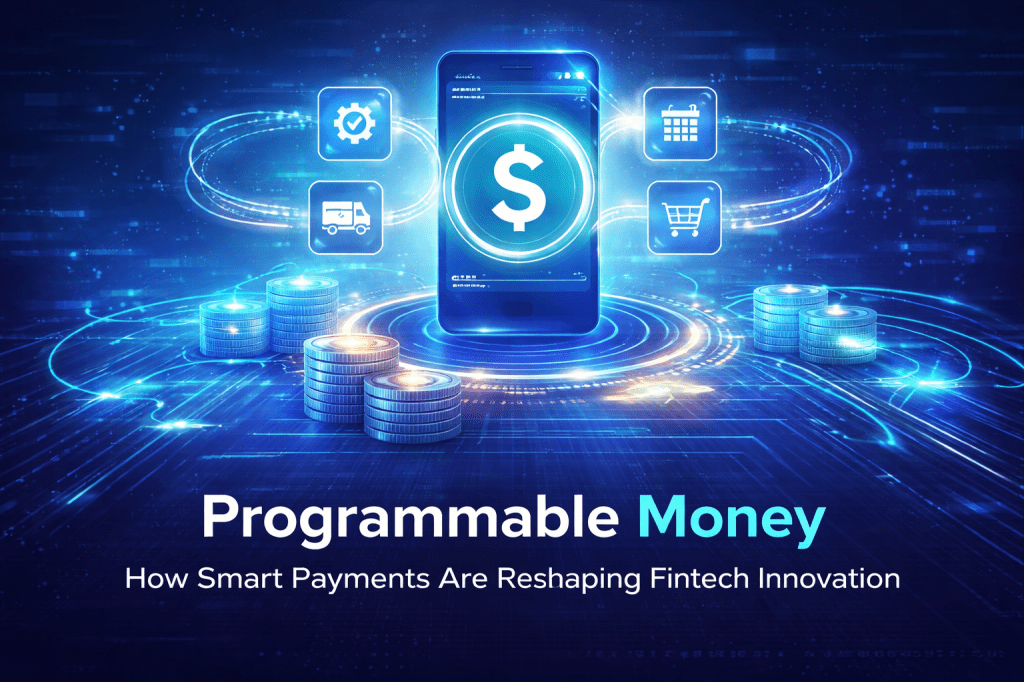
Programmable money is emerging as one of the most important innovations in fintech. Instead of payments being simple transfers from one account to another, programmable payments allow money to move automatically based on rules, conditions, or events. This shift is being driven by APIs, real-time payment rails, and stablecoin infrastructure, enabling businesses to automate financial workflows in ways that were not possible with traditional banking systems.
At its core, programmable money means attaching logic to payments. A transaction can be triggered when goods are delivered, when a contract milestone is completed, or when usage reaches a predefined threshold. For example, a logistics company could automatically release payment once a shipment is confirmed as delivered. A SaaS platform could bill customers dynamically based on real-time usage. Marketplaces could split funds instantly between multiple sellers at the moment of purchase. These types of workflows reduce manual reconciliation and speed up operations.
Stablecoins are accelerating this trend. Because they operate on programmable infrastructure, stablecoins allow developers to build automated payment flows with precise control. Funds can be locked, released, split, or routed automatically without requiring batch processing or manual approval. This is particularly useful for cross-border payments, where programmable settlement can reduce delays, intermediaries, and conversion costs.
Real-time payment networks are also contributing to programmable money. Instant rails allow triggered payments to settle immediately instead of waiting for bank processing windows. This opens new use cases such as instant supplier payments, automated payroll, and real-time revenue sharing. Combined with APIs, businesses can embed payment logic directly into their platforms and trigger money movement as part of normal workflows.
Another major use case is conditional payments. Companies can create rules such as spending limits, merchant restrictions, or time-based approvals. For example, a corporate expense system could automatically approve payments under a certain threshold while routing larger transactions for review. Subscription services can automatically pause billing if usage drops, or adjust pricing dynamically. These controls make payments more flexible and reduce operational friction.
Programmable money also improves transparency. Because payments are triggered by defined logic, businesses gain clearer audit trails and better visibility into financial flows. This is especially valuable for marketplaces, gig platforms, and multi-party transactions where funds must be split accurately. Automation reduces errors and eliminates manual reconciliation processes that often slow down finance teams.
As fintech infrastructure continues to evolve, programmable money is expected to become a standard feature of modern commerce. Payments will no longer be isolated actions but integrated components of software-driven workflows. Businesses will define rules, and money will move automatically when those conditions are met.
This shift represents a broader transformation in fintech innovation. Instead of building around payments, companies are building logic around money itself. Programmable payments enable faster operations, reduced costs, and entirely new business models—making them one of the most impactful fintech developments to watch.
 paymentsfuture